It was 9am on a Tuesday when I spoke to Hunter Smith, second generation at Frankland Estate in Western Australia. Well, it was 9am for me. Bedecked in overalls and baseball cap, it was 5pm for Hunter. He’d already done a day’s work in the vineyard and now had to be interrogated on his family business.
Harvest had only recently finished so I was keen to hear the inside scoop on the 2026 vintage. “Harvest went really well,” Hunter told me. “It’s been really dry for two years so we’ve had slower, more gradual ripening. The volume’s good and the quality’s looking good.”
The foundation of family
Frankland Estate was founded in 1988 by Hunter’s parents, Judi Cullam and Barrie Smith. Today, Hunter runs things with his sister, Elizabeth and her husband, Brian Kent – head winemaker since 2010.
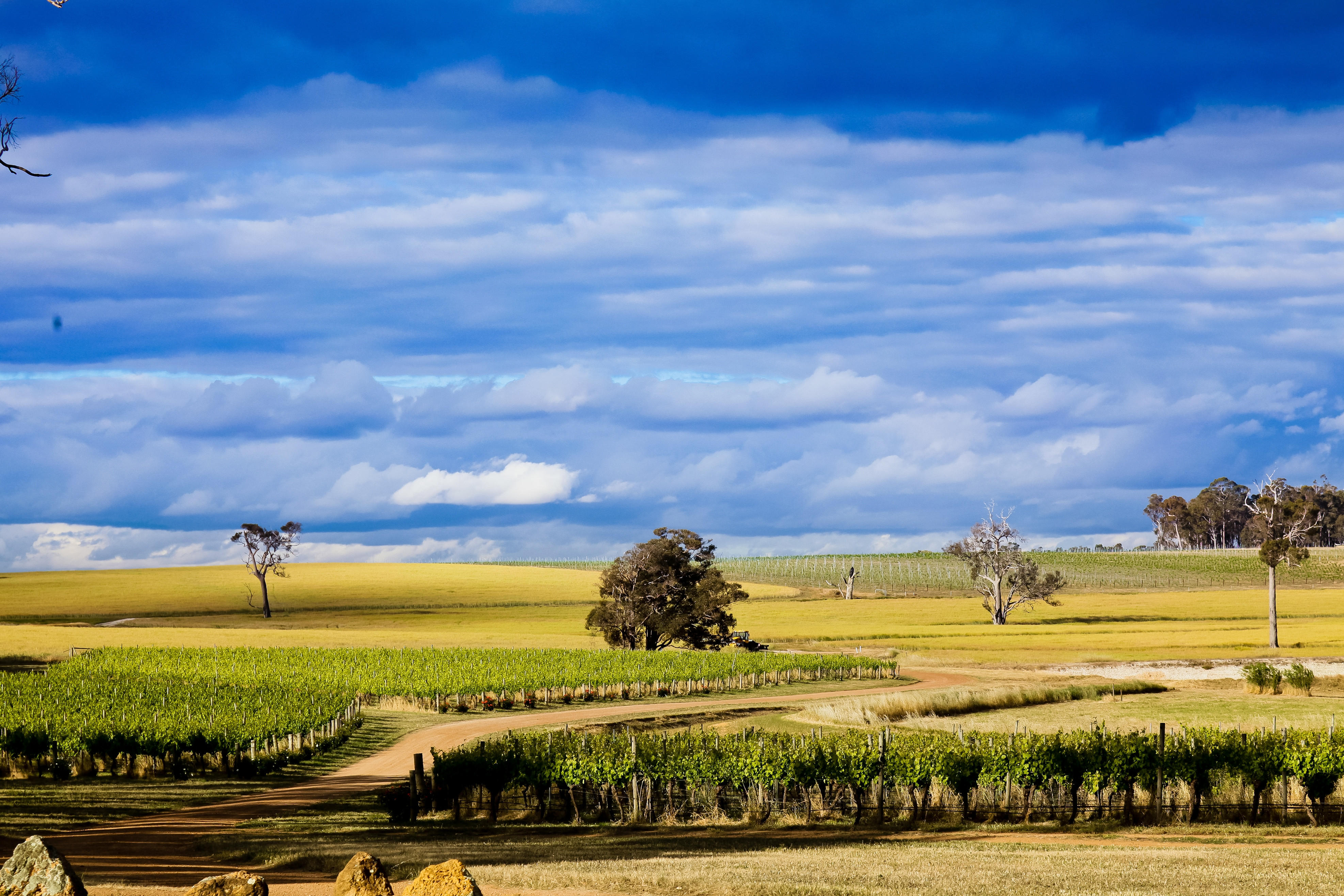
The cool climate region of Frankland River (which lends the estate its name) is incredibly remote and delightfully rural. It’s a four hour drive south of Perth and surrounded by open countryside. It’s dry, with cooling winds and significant variations in day and nighttime temperatures; disease pressure is very low for vines grown here. As such, the region lends itself beautifully to organic viticulture.
What had shaped the family’s decision to pursue organic certification, I wondered? “The way we were farming sort of fed naturally into going organic,” Hunter said. “And everyone
says
they’re organic. We went through certification between 2006 and 2009 – it was intense. We got some soil guys in who explained microbiology, pH levels, making sure you’re not putting artificial fertilisers down. The more we learned, the more we knew [certification] was the right way to go.”
Hunter’s grandparents on both sides were farmers – “people of the land”, he said. His paternal grandfather even had vineyards in the Murray-Darling (the best part of 2,250 miles due east of Frankland Estate). “When you've got a deep understanding of agriculture and how important your land is then you know how well things grow and how that equates to sustainability. That’s been part of our family for four generations.”
And what about his thoughts on mixing family with business? “It’s a strength. When my father was alive, we tallied up the vintages between us around the table one night – 148! Even today, when we were blending earlier, we all bring our own experience and value. But family businesses are bloody hard work. But there’s no doubt we’re making far, far better wines than if it wasn’t all of us [doing it].”
The wines of Frankland Estate
“I think our location sets the tone for our wines,” Hunter said. “It's a bit of a cliché, but with our hands-off approach, if we pick at the right time, the climate gives us an abundance of natural acidity. We’re producing wines with brightness, freshness, energy. You can’t do that without the right climate, soils and approach.”
Hunter is aware that Frankland Estate is a relative newcomer when compared to many of the world’s wineries. “We’re only about 50 years old. Mum tells this great story of being asked to co-present a Riesling dinner in Germany. She proudly said she’d just celebrated her fourteenth vintage. One of the German fellows stood up and said they were celebrating 400 years of winemaking. We still have far to go. It takes generations to make world-class wines.”
Variety is the spice of wine
Frankland Estate has been making our Own Selection Australian Chardonnay for almost 10 years. With its tempting aromas of lemon and delicious yellow fruit flavours, it’s certainly one of my favourites. What did Hunter want this wine to say about Frankland Estate, I asked him.
“You think about the characteristics in Chardonnay that we’re famous for in Western Australia: juiciness, subtleness, good fruit intensity, but with lovely savoury undertones. Our wines are very Western Australian, which is a broad brush, but at the same time, we're extremely nuanced from our own vineyards.”
Hunter’s parents spent a lot of time in Bordeaux before founding Frankland Estate. When they returned, they wanted to create an Australian take on a Bordeaux blend. As such, they planted the five classic Bordeaux varietals: Merlot, Cabernet Franc, Cabernet Sauvignon, Malbec and Petit Verdot.
They then added two hectares each of Chardonnay and Syrah and really wanted to grow Riesling. “It was a favourite of theirs – probably because my father was South Australian. Riesling was reasonably unfashionable then, so Dad said ‘Well, if nobody wants it, I’ll drink it myself!’ But thankfully, we found a nice market for it.”
I asked Hunter if he feels inspired by other regions as his parents were. Is he trying to make Rhône style Syrah or Loire inspired Cabernet Franc?
“I’d be lying if I said there wasn’t inspiration. Those are old, amazing regions for good reason and they’re amazing wines. But we’re inspired by Frankland River being so remote and unique. We should strive to reflect that and that’s at our core.”
And will there be any more varieties to come at Frankland? “We’ve planted or grafted very small quantities of varieties like Grüner Veltliner and Touriga Nacional – things that have sparked our interest over the years. And we’ve just planted half a hectare of Nebbiolo. But we want to focus on what grows really well and continue to learn with those [varieties].”
The climate challenge
The challenges of climate change are not lost on Hunter.
“It’s becoming drier. Until a couple of years ago, I’d have told you it was only drier, not warmer. We’re conscious of doing what we can. We’ve implemented composting with earthworms; we put straw under the vines to protect the roots and don’t collect our grass cuttings. We try to keep organic matter, keep the soils cool and the microbes happy. We produce more power from our solar panels than we use each year – but because of needing power in the middle of the night and not having batteries big enough, we’re still hooked up to the grid. Yes, solar saves us money but it was also a responsibility we felt we should take. We can do it, so we should.”
Nobody could accuse Hunter and the team at Frankland of resting on their laurels. Viticulture and winemaking are rarely ever about the “now” but nearly always about looking ahead – whether that’s planting new varieties or experimenting with different winemaking techniques.
“After 38 years of making great wine, we’re only just getting going. We’ve got a lot of storytelling to do and success to share. The small building blocks, or the ‘one percenters’ are important. Whether that’s the one percent of Touriga Nacional in our Estate Shiraz or something else, they’re points of uniqueness and something interesting to try.”
Whether it’s a Frankland Estate Nebbiolo (to be confirmed) or our Own Selection Australian Chardonnay, there is always something interesting to try from Frankland Estate. In Hunter’s own words, “It’s pretty exciting.”