


On vintage Port and traditions worth keeping
Written by

Five generations of Symingtons have sold Port to Berry Bros. & Rudd, so it’s funny that one of us should end up here as Co-CEO.
My grandfather and his two first cousins would often come to London to represent one of the family Port houses. One day, all three of them were in town, each with plans to call in at No.3 St James’s Street to show their wares: Michael Symington with Dow’s in the morning, Ian Symington with Warre’s in the early afternoon and James Symington with Graham’s towards the end of the day. By the time the second one had been and gone, then-Chairman Christopher Berry Green put a sign in the window: “No hawkers, no Symingtons”.

Five generations of Rob Symington’s family have sold Port to Berry Bros. & Rudd
That was a different time. We’ve still got Sir Winston Churchill’s invoices downstairs at No.3, where his orders had Graham’s Six Grapes alongside his beloved Champagne Pol Roger. Berry Bros. & Rudd has such a history of selling the best Port, and maintains such a loyal set of followers of it, that it’s easy – if not downright tempting – to think that vintage Port remains the thriving category it once was. Sadly, things aren’t quite so simple. People are still buying, collecting and drinking these wines, just not as much as before. Cruelly enough, this is at the exact time that the wines are better than they ever were.
Vintage Port is better than it ever was
Declaring some bias (you can take the man out of the Douro…), I honestly believe that vintage Port is one of the world’s great fine wines. And it really is better today than perhaps it ever has been. This is not the wine that my grandfather made; it’s not even the wine my father made.
For a category that seems old-fashioned, there’s a huge amount of innovation: advances in the vineyard and the winery, in how the wines are blended, in the brandy we use, and plenty more besides, have sent quality through the roof. All the while, prices have remained relatively modest compared to the other great wines, offering genuine value for money.
In the past, the Port houses only declared a vintage three times a decade because the wine just wasn’t good enough otherwise. Now it’s good enough every year. It’s great. But that presents a different challenge, of whether or not to respect the status quo, to still only declare the very best. That’s what we do at Symington Family Estates, which is why we waited so long after 2017 to declare the 2024 vintage. The 2024s are simply that good, it was a year when the stars just aligned; but I digress.
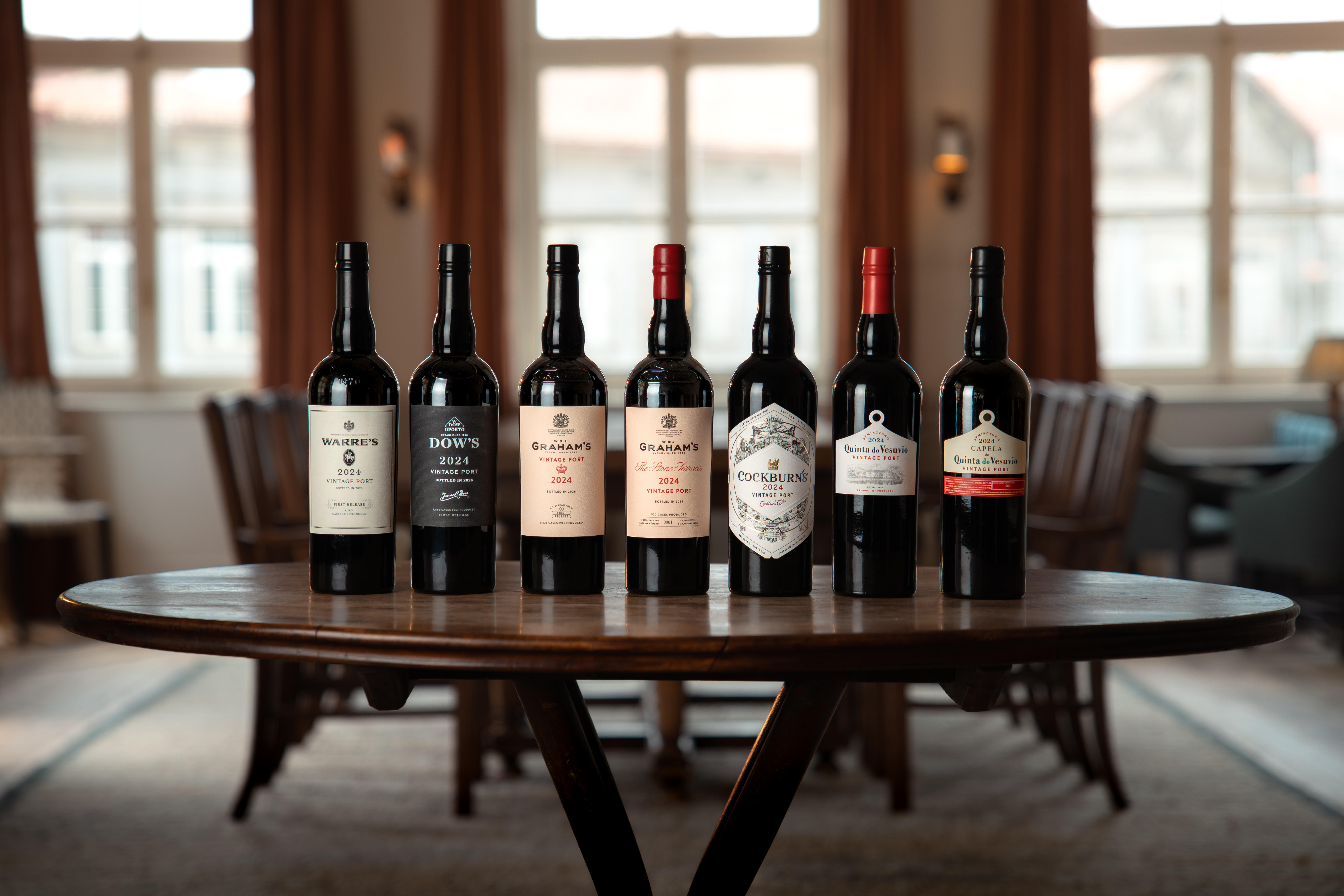
The 2024 vintage at Symington Family Estates, “a year when the stars just aligned”
The magic of vintage Port
Vintage Port represents about one percent of total Port production. There’s not a lot of it made, and it’s at its best for those special occasions in life. My dad rocks out the big guns at Easter, Christmas, anniversaries and birthdays. It helps that my sister and I were born in 1985 and 1983 respectively, both good vintage years.
This is a wine that really brings people together. It’s the end of the meal, the Port comes out: you might have some fun with it, guessing the vintage and producer, passing it to the left. There’s a little bit of ceremony, but not too much. It’s that point in the evening where people stop just talking to their neighbour and the table has one conversation again. It raises the energy and brings people together in ways that I haven’t seen other wines do. It’s all a bit of fun, and none of it should be taken too seriously.
Growing up, we were always told not to drink Port until it’s 25 years old at least. You had to age the wine because it was undrinkable when young. But that’s changed, and today the wines are incredible when young, and you can drink them throughout their lifespan – which, by the way, routinely goes to at least 50 years.
Enjoying vintage Port
For the first 10-15 years, they’re young and fruit forward. Because of how well they’re made today, they basically drink like full-bodied red wine. They’re moreish, too, because of the acidity; vintage Port is more than just a sweet wine. Aged vintage Port takes on a viscosity and a richness that is just amazing.
Believe it or not, vintage Port is not just the preserve of state dinners and Oxbridge colleges. Dare I say, it’s an incredibly versatile wine. You pick – or make – the occasion, and you’ll find it works wonders in a variety of settings.
For me, vintage Port is best enjoyed by itself; you don’t actually need to pair it with anything. But the classic pairings like cheese, notably Stilton, are classics with good reason. Because it’s a full-bodied, structured wine with 20% alcohol, vintage Port can also hold its own against spicy food and fatty, unctuous, umami flavours. Try it with Turkish cuisine – seriously.

“Vintage Ports are like time capsules,” says Rob Symington
Vintage Ports are like time capsules. The tradition of laying them down and drinking them through the decades, through your life, is very special.
My father is writing a book about his grandfather, Maurice Symington. Maurice served in the Portuguese Expeditionary Force in the First World War, and drank vintage Port in the trenches with Churchill. A decade later, he was walking down St James’s Street when he crossed Churchill, who pointed at him with his walking stick and just said “Port”.
Dad recently bought some Dow’s 1924 at auction, which we enjoyed together in 2024. Maurice would’ve blended this very wine, and then a hundred years later here we are drinking it at home. It was stunning. It kind of puts you in perspective, your daily worries; you zoom out. Some traditions are best left behind us, of course, but not all of them are irrelevant. Some traditions are lovely.